When the Treasure Chest Becomes a Trap: Rethinking Magical Items Before They Derail Your Campaign
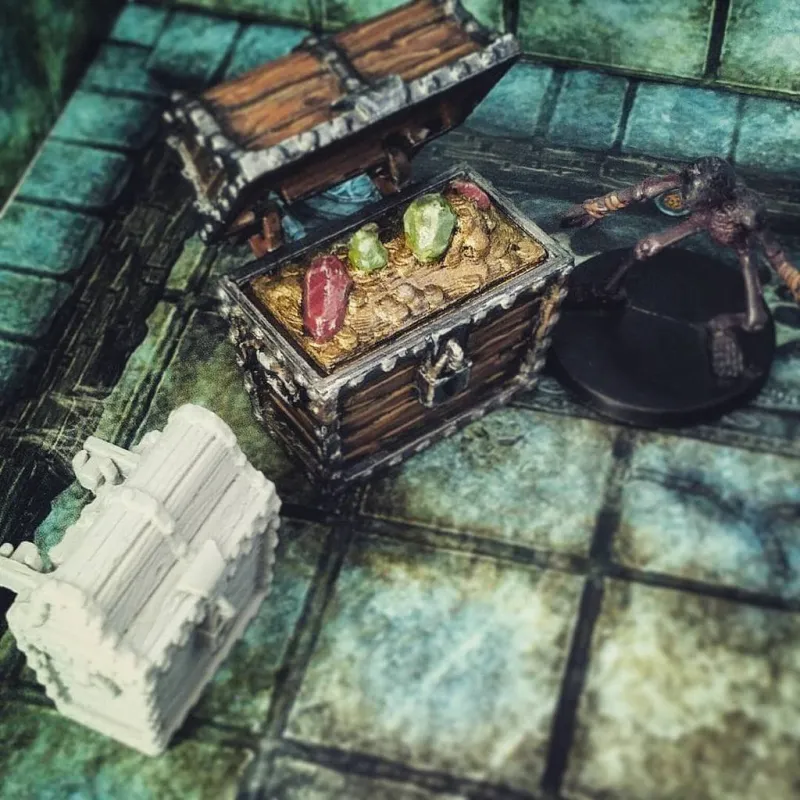
Photo: dungeon master treasure chest magical items fantasy tabletop RPG, via www.blackscrollsgames.com
There is a particular kind of campaign death that does not arrive with a dramatic session-ending argument or a player storming away from the table. It arrives quietly, over three or four sessions, as the dungeon master notices that encounters feel hollow, that the players seem bored rather than tense, and that the story threads so carefully constructed over months of preparation have somehow lost their pull. In many of these cases, the culprit is sitting in a player's inventory: a magical item that should never have been awarded when it was.
The fantasy gaming tradition has always celebrated treasure. From the earliest editions of Dungeons & Dragons to the sprawling fifth-edition campaigns that dominate tables across the United States today, loot is currency — not merely in gold pieces, but in excitement, character identity, and player investment. The problem is not magical items themselves. The problem is the absence of a deliberate framework for deciding when, whether, and at what narrative weight a given item should enter your game.
The Cascade Effect: How One Item Unravels a Campaign
Consider a common scenario. A party of four reaches the midpoint of a carefully balanced dungeon, and the dungeon master — eager to reward strong play and maintain momentum — places a Cloak of Displacement in a chest guarded by a mid-tier enemy. The item is legitimate, well within the published guidelines, and the players are thrilled. What happens next, however, is rarely discussed in dungeon master handbooks.
The rogue who claims the cloak now imposes disadvantage on all attack rolls against them as long as they have not taken damage. In practical terms, this means that every encounter designed around attrition, hit point management, or tactical positioning must now account for a near-untouchable party member. The dungeon master quietly adjusts. Enemies begin targeting other party members exclusively. Then the players notice the pattern and grow frustrated. The dungeon master adds more enemies with blindsight. The rogue feels their prize has been neutered. Engagement drops on both sides of the screen.
This is the cascade effect — a single item triggering a chain of compensatory decisions that progressively distort the game's internal logic. The original encounter design, the narrative pacing, and the intended sense of mortal danger all erode together.
The Three Failure Modes of Magical Item Distribution
Most dungeon masters who encounter this problem are not making reckless decisions. They are making well-intentioned ones without a complete picture of the downstream consequences. The failure modes tend to cluster around three distinct patterns.
Premature power escalation occurs when items significantly above the party's current tier are awarded before the campaign's stakes have risen to match them. A Staff of Power is a magnificent reward — but awarded at fifth level in a campaign that has barely introduced its central antagonist, it compresses the arc of character growth into a fraction of its intended span. Players feel powerful before they have earned that feeling through narrative struggle.
Unfocused stacking describes situations in which multiple items compound one another in ways the dungeon master did not anticipate. A Ring of Protection paired with a Cloak of Protection and a character with the Defensive Duelist feat creates an armor class so high that standard enemies become irrelevant. Each item, reviewed in isolation, appears reasonable. Together, they produce a character who is functionally immune to the threats the campaign was designed to deliver.
Narrative displacement is perhaps the subtlest failure mode. It occurs when a magical item solves a problem the story needed the characters to solve through ingenuity, relationship-building, or sacrifice. A Gem of True Seeing that reveals the traitor in the royal court eliminates the entire investigative arc the dungeon master spent weeks developing. The players feel clever for using the item, but the campaign loses a structural pillar.
A Practical Framework for Item Evaluation
Addressing these failure modes does not require stripping the joy from treasure distribution. It requires applying a consistent evaluative lens before any item enters the game. The following four questions form the foundation of that lens.
What does this item remove from the game? Every magical item eliminates some form of challenge or uncertainty. A Bag of Holding removes encumbrance as a consideration. A Sending Stone removes communication as an obstacle. Neither of these is inherently problematic, but the dungeon master must ask whether the challenge being removed is one the campaign still needs. If the next three sessions depend on the party being unable to coordinate across distances, the Sending Stone should wait.
At what level does this item stop being interesting? Some items are most meaningful when they represent a genuine leap in capability. Awarded too late, they feel anticlimactic. Awarded too early, they foreclose the organic growth of player strategy. Mapping the item's relevance against the campaign's anticipated arc allows for more precise timing.
How does this item interact with what the party already has? This requires the dungeon master to maintain an honest accounting of the party's current capabilities — not just individual items, but the combined effect of class features, feats, and existing magical equipment. Many dungeon masters skip this step, and it is precisely where unfocused stacking originates.
Does this item serve the story or circumvent it? This is the most important question, and the one most frequently overlooked in the excitement of rewarding players. Items that create new story possibilities — a Mirror of Life Trapping that raises questions about who was imprisoned before the party found it, for instance — are almost always preferable to items that close story doors. When an item's primary function is to dissolve a narrative problem rather than complicate it, reconsider the timing or substitute an alternative reward.
Recalibrating Without Punishing Your Players
If you recognize your campaign in the failure modes described above, the path forward does not involve confiscating items or retconning their existence. Players form genuine attachments to their equipment, and undermining those attachments destroys trust at the table.
Instead, consider introducing narrative consequences that recontextualize overpowered items. An artifact with a storied history might attract the attention of a faction that wants it recovered. A weapon of extraordinary power might carry a curse that manifests as the campaign deepens. These approaches preserve the player's sense of ownership while restoring the campaign's capacity for meaningful tension.
For dungeon masters building their frameworks prospectively, the most effective long-term practice is to treat magical item distribution as a narrative decision first and a mechanical one second. The question is never simply whether the party can handle a given item's power level. The question is whether the campaign is better — richer, more surprising, more emotionally resonant — with that item in it at this particular moment.
The treasure chest is one of tabletop fantasy gaming's most enduring symbols. It deserves to be treated with the same care and intentionality as any other element of the dungeon master's craft. When it is, the items inside become story — not the quiet ending of one.