Beyond the Magic Item Table: Building Treasure That Players Will Actually Remember
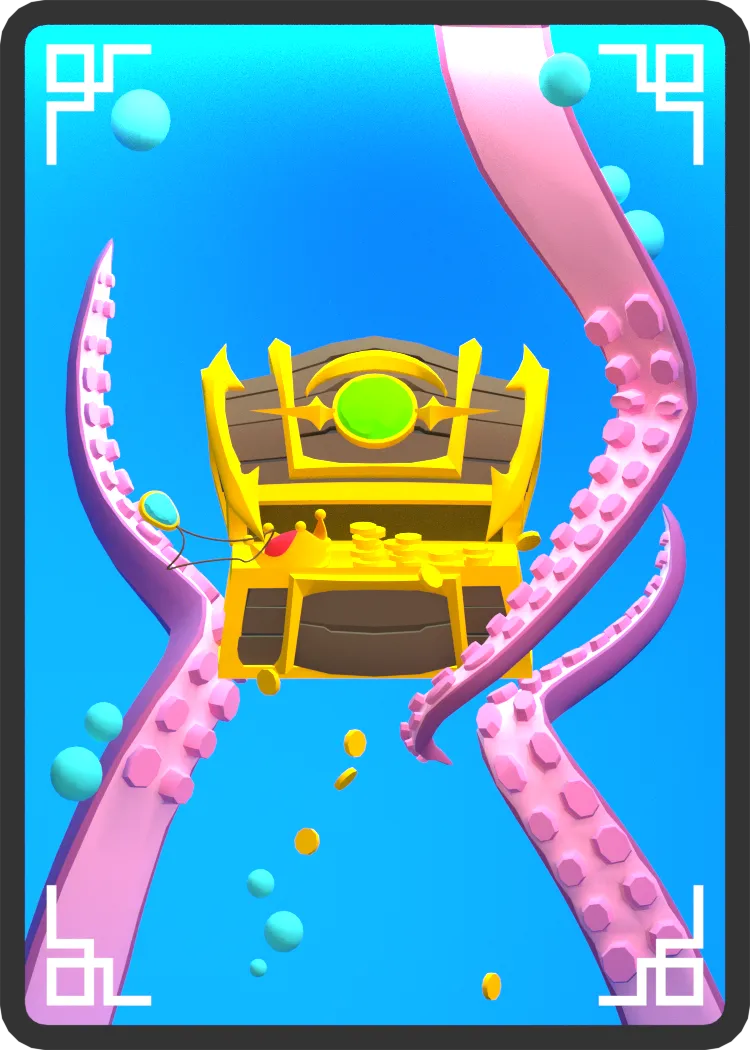
Photo: Quaternius, CC0, via Wikimedia Commons
There is a particular kind of silence that falls over a gaming table when the Dungeon Master reads out another +1 longsword from a random loot roll. It is not the silence of awe. It is the silence of mild, politely suppressed disappointment — the sound of players who have been here before and expected something more. If you have heard that silence recently, this article is written for you.
Treasure distribution is one of the most psychologically loaded moments in any tabletop RPG session, yet it is routinely treated as a bookkeeping exercise. Standard magical item tables, for all their utility, were designed with balance in mind, not drama. They answer the question what does the party receive? while leaving entirely unanswered the far more important question: why should anyone care?
The Psychology of the Reward Moment
Behavioral psychology has long established that the anticipation of a reward can be more emotionally potent than the reward itself. Tabletop RPGs exploit this dynamic brilliantly in combat and exploration — tension builds, stakes escalate, and then the climax arrives. The problem is that the treasure reveal, which ought to function as the emotional resolution of that tension, frequently deflates it instead.
When a player defeats a centuries-old dragon and receives a randomly generated Boots of Elvenkind, the mechanical value may be perfectly appropriate, but the narrative contract has been broken. The player invested dramatically; the system responded administratively. Over time, this pattern trains experienced players to disengage from loot entirely, treating it as a resource management problem rather than a storytelling moment.
The fix is not to inflate the power of rewards. It is to restore their meaning.
Tying Treasure to Character Arcs
The single most effective technique for making loot feel memorable is deceptively simple: design rewards in response to what your players have already told you matters to their characters.
Session zero conversations, backstory documents, and even offhand comments during play are all intelligence-gathering opportunities. A fighter who grew up in poverty and has repeatedly mentioned her distrust of nobility is not just providing flavor — she is handing you a design brief. A sword recovered from the estate of the corrupt lord who destroyed her village is not merely a weapon. It is a chapter in her story, rendered tangible.
This approach does not require every piece of loot to carry profound personal significance. It requires only that some items do, and that those items arrive at dramatically appropriate moments. The contrast between mundane rewards and personally resonant ones actually heightens the impact of both.
The Earned Versus Random Distinction
Experienced players have an acute sensitivity to whether a reward was placed or rolled. This is not snobbery — it is pattern recognition developed over years of play. When a reward feels genuinely earned, it is because the player can trace a causal chain from their choices to the outcome. When it feels random, that chain is absent, and the reward registers as noise rather than signal.
Consider two versions of the same scenario. In the first, a party defeats a necromancer and rolls on a treasure table, receiving a Ring of Spell Storing. In the second, the Dungeon Master has already determined that the necromancer spent decades attempting to perfect a ritual that required storing magical energy. The Ring of Spell Storing is therefore not incidental — it is the physical artifact of his obsession, still partially charged with his failed workings, and potentially a clue to his larger plans. Same item. Entirely different experience.
The mechanical content of the reward has not changed. The narrative infrastructure surrounding it has transformed it from a transaction into a discovery.
A Practical Framework for Loot Design
Rather than rolling on tables after the fact, consider building your treasure backward from the following four questions:
Who owned this item, and what did it mean to them? Every significant magical object was created or acquired by someone with intentions. Those intentions leave traces — in the item's appearance, its quirks, its history. A Cloak of Invisibility that once belonged to an assassin might carry a faint bloodstain that no spell can fully remove. That detail costs nothing mechanically and adds everything narratively.
What does this reward reveal about the world? Treasure is one of the most underutilized worldbuilding tools available to a Dungeon Master. The contents of a dungeon's hoard should tell a story about the civilization that built it, the creature that accumulated it, and the historical forces that led to its abandonment. A dragon's hoard containing coins from three distinct defunct empires is an implicit history lesson.
Which player will find this most meaningful, and why? Not every item needs a personal connection, but at least one item per major reward cache should speak directly to a character's arc, backstory, or stated goals. This requires knowing your players — which, frankly, you should.
What does receiving this item cost, complicate, or demand? The most memorable rewards are rarely purely beneficial. A Vorpal Sword that was the favored weapon of a now-sainted hero may be extraordinarily powerful and extraordinarily dangerous to carry through a city that venerates that hero's memory. Tension and utility coexisting in a single object creates the kind of player investment that no random table can replicate.
Managing the Mundane
None of this means that every gold piece needs a backstory. Mundane wealth and minor magical items still serve a critical function: they establish the baseline against which meaningful rewards register as exceptional. The goal is not to eliminate randomness or utilitarian loot — it is to ensure that the rewards players are meant to remember are designed to be remembered.
A useful rule of thumb: for every major narrative milestone — a boss defeated, a mystery resolved, a significant sacrifice made — plan at least one piece of treasure that was designed rather than rolled. Reserve the tables for the filler, and reserve your creative attention for the moments that matter.
The Lasting Impression
Years after a campaign concludes, players rarely remember the exact mechanical properties of the items their characters carried. What they remember is the story of how those items were found, what they meant, and what was done with them. A humble dagger recovered from a dying mentor will outlive a dozen randomly generated artifacts in the memory of the player who carried it.
Treasure, at its best, is not a reward for playing the game. It is an argument that the game is worth playing — that the choices made at the table have weight, that the world responds to the characters who inhabit it, and that the story being told is worth continuing. That argument deserves more than a dice roll.