Old Rules, New Life: Why Indie RPG Designers Are Raiding the D&D Vault
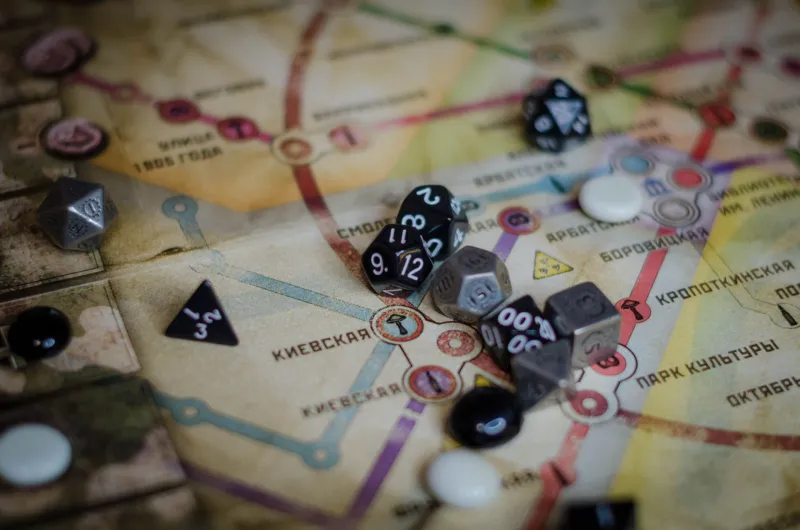
Something unusual is happening at gaming tables across the United States. While mainstream publishers continue expanding their rulebooks with ever-more-elaborate subsystems, a growing contingent of independent designers is moving in precisely the opposite direction. They are returning to the source—excavating mechanics from first and second-edition Dungeons & Dragons that were quietly abandoned decades ago—and building thriving games around them. The result is a movement that challenges nearly every assumption modern tabletop design has made about what players actually want.
The Weight of Modern Rules
To understand why old-school mechanics are experiencing a renaissance, one must first appreciate the problem they are solving. Contemporary roleplaying games, including the dominant fifth edition of D&D, have trended toward comprehensiveness. Character creation involves dozens of choices. Combat encompasses layers of action economy, bonus actions, and condition tracking. Feats, subclasses, and multiclassing options multiply the decision space exponentially.
For many players, this depth is precisely the appeal. But for a significant and vocal segment of the community, the accumulated weight of modern rulesets has begun to feel less like a feature and more like an obstacle. Prep time increases. Cognitive load at the table rises. The spontaneous, improvisational quality that drew many players to roleplaying games in the first place becomes harder to sustain.
Indie designers identified this tension and responded with something counterintuitive: less.
THAC0 and the Philosophy of Friction
Few mechanics are more associated with old-school D&D than THAC0—an acronym standing for "To Hit Armor Class 0." To contemporary players, it reads as needlessly arcane. Rather than adding a modifier to a die roll and comparing it to a target number, THAC0 required players to subtract the target's Armor Class from their THAC0 score to determine what they needed to roll. The arithmetic was counterintuitive, the direction of the numbers inverted from what modern design would prescribe.
And yet, several indie designers have argued—persuasively—that this friction was not a flaw. It was a feature that encouraged players to internalize their characters' combat capabilities rather than outsourcing the math to a character sheet. Games like OSRIC and the retroclone community surrounding it have preserved THAC0 not out of nostalgia alone, but as a deliberate design statement about the relationship between mechanical engagement and immersion.
More broadly, the old-school philosophy treats difficulty and opacity as legitimate tools. When a rule requires effort to apply, players engage with it differently than when the system handles everything automatically.
Roll-Under Systems and the Character Sheet as Portrait
Perhaps the most elegant mechanic being rehabilitated by indie designers is the roll-under attribute check. In its simplest form, this system asks players to roll a twenty-sided die and succeed if the result falls at or below the relevant attribute score—Strength, Dexterity, Intelligence, and so on. No modifiers, no proficiency bonuses, no situational adjustments. The character's raw score is simultaneously the target and the measure of competence.
Cairn, designed by Yochai Gal and released under a Creative Commons license, exemplifies this approach. Its character sheet fits on a single index card. Attributes run from three to eighteen. Combat is resolved through opposed rolls rather than an elaborate action economy. The entire game can be taught in under ten minutes.
What this minimalism accomplishes is significant. The character sheet becomes less a mechanical dashboard and more a portrait—a snapshot of who a character is rather than a catalog of what they can do. Players report that this constraint paradoxically increases their attachment to characters, because every decision carries genuine weight when there are no fallback abilities or rescue mechanics to soften failure.
Old School Essentials, designed by Gavin Norman and published by Necrotic Gnome, takes a different approach to the same philosophy. Rather than stripping the original Basic D&D rules down further, it presents them with modern graphic design clarity and organizational precision. The mechanics are preserved almost entirely intact; what changes is the accessibility of the presentation. The result has become one of the best-selling products on DriveThruRPG, demonstrating that the audience for these older systems is larger than many industry observers anticipated.
What the Revival Reveals
The old-school renaissance—often abbreviated as the OSR—is not simply a nostalgia movement, though nostalgia certainly plays a role for players who encountered these games in their original form. More fundamentally, it represents a critique of a design philosophy that equates complexity with depth.
The designers working in this space are making an argument that the most meaningful moments in tabletop roleplaying emerge from the interaction between players, referee, and fiction—not from mechanical systems, however elegant. Rules, in this view, should be lean enough to get out of the way.
This perspective has begun influencing designers well outside the OSR community. Games like Mörk Borg, which blends old-school sensibilities with avant-garde visual design, have attracted players who would never describe themselves as OSR enthusiasts. The mechanical DNA—sparse character options, lethal combat, referee discretion over rigid rules—appears in games across an increasingly wide range of aesthetics and settings.
A Living Conversation Across Editions
Perhaps the most compelling aspect of this revival is what it suggests about the health of tabletop gaming as a creative ecosystem. The fact that independent designers can build commercially viable games from forty-year-old mechanical foundations—and that those games can generate genuine excitement and community—speaks to the richness of the hobby's history.
The old-school renaissance is not a rejection of modern game design so much as a reminder that design choices are always choices. Every rule included is also a rule that crowds out something else. Every system that handles a situation automatically is also a system that removes a decision from the players.
For dungeon masters and players who have found themselves drowning in options, these stripped-down games offer something genuinely valuable: a return to the table, unencumbered.
The vault has been opened. What designers and players find inside may well shape the next decade of the hobby.