The Modular Campaign: Structural Techniques for Stories That Survive Player Chaos
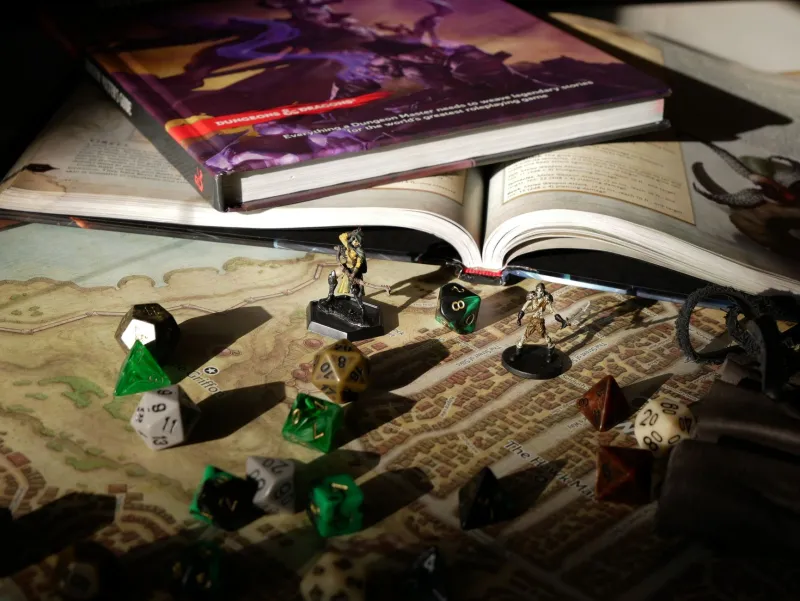
Every Dungeon Master who has run a campaign of any significant length has experienced the moment. You have planned the next three sessions. The narrative is elegant, the reveals are timed, the emotional beats are positioned with care. Then your players look at the map, point to the one location you annotated as 'background detail,' and announce that they are going there instead.
This is not a problem to be solved. It is the fundamental nature of collaborative storytelling, and the Dungeon Masters who thrive are not the ones who prevent it—they are the ones who have built campaigns that absorb it.
The Illusion of the Linear Arc
Most narrative advice for tabletop campaigns borrows heavily from screenwriting and novel structure: three-act frameworks, rising action, climactic confrontations, thematic resolution. These models are genuinely useful, but they carry an embedded assumption that is dangerous in a collaborative medium—the assumption that the audience will move through the story in the order the author intended.
Film audiences cannot choose to skip act two. Novel readers who skip chapters miss information the author has deliberately withheld. Players at a tabletop session can, and regularly do, ignore the narrative sequence entirely. A campaign architecture borrowed wholesale from linear media will fracture the moment players exercise genuine agency.
The solution is not to abandon narrative structure. It is to build structure that does not depend on sequence.
Themes as Load-Bearing Walls
The most resilient campaigns are organized around thematic through-lines rather than plot sequences. A plot sequence asks: what happens next? A thematic through-line asks: what does this world consistently argue about the nature of power, loyalty, sacrifice, or identity?
Consider the difference between a campaign structured around 'the party must stop the lich from opening the planar gate' and one structured around 'every significant choice in this world involves trading short-term safety for long-term consequence.' The first is a plot. The second is a theme. The plot collapses the moment players decide they do not care about the lich. The theme survives because it can be expressed through any number of specific conflicts—political negotiations, personal relationships, resource decisions, moral dilemmas—regardless of which ones the players choose to pursue.
When designing a campaign, articulate two or three thematic propositions before writing a single plot point. These become the load-bearing walls of your structure. Everything else—the specific factions, the named villains, the dramatic set pieces—is furniture. Furniture can be rearranged.
Modular Story Beats: Designing for Interchangeability
A modular story beat is a narrative unit that carries emotional and thematic weight independent of the specific context in which it occurs. Rather than scripting 'the players learn that Lord Aldric has been poisoning the grain supply at the market in Thornhaven,' design the beat as 'the players discover that a trusted authority figure has been systematically harming the vulnerable population they are protecting.'
The specific names, locations, and mechanics of that beat can be attached to whatever is currently relevant to the players' choices. If they never went to Thornhaven, Lord Aldric becomes a different figure in a different location. The emotional content—betrayal of trust, complicity by proximity, the question of what to do with knowledge of institutional corruption—remains intact.
This approach requires maintaining a library of beats rather than a sequence of scenes. Organize them by emotional register, thematic content, and the kind of player decision they invite. When players go off-script, you are not improvising from nothing. You are selecting from a prepared inventory.
Recurring Characters as Structural Anchors
When plot sequences fail, recurring characters often succeed. A well-constructed NPC who represents a thematic argument—an idealist whose methods are becoming corrupt, a pragmatist who is secretly capable of genuine sacrifice—can appear in almost any context and immediately orient players within the campaign's thematic landscape.
These characters function as structural anchors because players form attachments to them regardless of plot. If a player genuinely cares what happens to a particular NPC, that NPC's presence creates narrative gravity wherever they appear. The campaign does not need to force players toward specific locations or events; it needs to ensure that the people players care about are connected to whatever the players are currently doing.
Design recurring characters with clear internal contradictions—qualities that are in genuine tension with each other—and allow those contradictions to evolve in response to the players' actions. A character who changes because of what the players did is a character who makes the players feel that their choices matter, which is the foundational requirement of meaningful player agency.
The Consequence Web: Making Divergence Feel Intentional
One of the most effective techniques for managing off-script behavior is the consequence web—a pre-designed map of how the world responds to various player choices, including choices you did not anticipate as primary paths.
For every major faction, location, or NPC in your campaign, define: what happens if the players engage deeply, what happens if they ignore it entirely, and what happens if they actively work against it. These are not scripted outcomes; they are behavioral tendencies. A faction that the players ignore does not simply wait for them to return. It pursues its own agenda, which may have become more entrenched, more desperate, or more powerful in the interim.
When players go off-script and return to the main narrative later, they find a world that has been moving without them. This creates the sensation of a living setting rather than a stage waiting for the protagonists to return. More importantly, it makes divergence feel like a meaningful choice rather than an interruption—because the world genuinely changed in response to what the players did and did not do.
Releasing the Destination
The hardest skill in modular campaign design is releasing attachment to specific outcomes. Many Dungeon Masters enter campaigns with a vision of how the story ends—a particular villain defeated in a particular way, a thematic statement delivered through a specific narrative event. When players diverge significantly, that vision must be held loosely.
What can be protected is the thematic statement itself. If your campaign is ultimately about the cost of power, that argument can be made through dozens of possible endings. The players who overthrew the tyrant and became tyrants themselves are making the same thematic point as the players who sacrificed everything to preserve a flawed institution. The specific narrative path is variable. The meaning it generates is not.
Design toward meaning, not toward plot. Build systems that generate meaning through player choice rather than systems that deliver meaning through scripted events. The campaign that survives player chaos is not the one with the most detailed plan—it is the one with the most robust thematic architecture.